How Head to Head works
We compare two products or product types head to head, giving you a real verdict on which is the better choice for your situation — and exactly when to choose each one.
UV Baby Bottle Sterilizer vs Steam Sterilizer — Which Is Safer and Better in 2026?
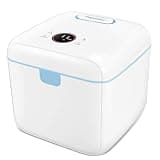
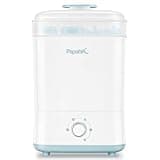
Papablic 4-in-1 UV Light Sanitizer, Dryer and Storage Box
No heat, no moisture — sterilises with ultraviolet light

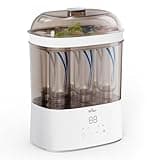
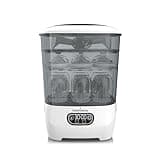
Bear Bottle Sterilizer and Dryer, 2-Layer Electric Steam Sanitizer
Fast, proven, and compatible with almost everything
Our verdict — Steam Sterilizer wins
For daily baby bottle sterilisation, the steam sterilizer wins. Steam technology has decades of clinical validation, kills 99.9% of bacteria and viruses in 6–8 minutes, and works reliably with every bottle type on the market. UV sterilizers are genuinely useful for specific situations — heat-sensitive items, quick top-up sterilisation, and travel — but they are not a like-for-like replacement for steam when you are sterilising multiple bottles multiple times per day.
Buy UV Sterilizer if…
You have heat-sensitive items that cannot be steam-sterilised, you travel frequently, or you need quick top-up sterilisation between feeds.
Buy Steam Sterilizer if…
You are setting up for daily bottle feeding from birth and want the most clinically validated, cost-effective sterilisation method.
Every new parent eventually opens their bottle sterilizer after a cycle, sees moisture still clinging to the inside of a Dr Brown's anti-colic vent, and wonders whether UV would have been the smarter choice — dry, modern, no waiting around. It is a reasonable thought, and the marketing around UV sterilizers leans into it. But the difference between these two technologies is not about aesthetics or convenience. It comes down to physics: how each method reaches the surfaces inside your baby's bottles, and where each one falls short in ways the product page does not mention.
A steam sterilizer works by boiling water into pressurised steam at over 100 degrees Celsius, flooding the entire chamber and contacting every surface. A UV sterilizer uses ultraviolet-C light at 254nm to damage bacterial DNA — genuine hospital-grade technology, but limited by direct line-of-sight exposure. Both kill bacteria effectively when conditions are right. The problem is that conditions inside a baby bottle are not simple: narrow necks, threaded caps, anti-colic valves, and nipple holes all create surfaces that one method handles better than the other.
This article covers the UV baby bottle sterilizer versus steam sterilizer comparison in full — sterilisation coverage, speed, reliability, cost, and real-world convenience — so you can make the right decision for your feeding setup in 2026.
What is a UV Baby Bottle Sterilizer?
A UV baby bottle sterilizer uses ultraviolet-C light at a wavelength of 254nm to destroy the DNA structure of bacteria, viruses, and mould. The bottles sit inside a chamber lined with UV-C lamps or LEDs, and a cycle runs for 5–10 minutes depending on the model. There is no water, no heat, and no moisture — items come out dry and ready to use immediately. The technology is the same used in hospital water purification and laboratory decontamination, scaled down for a consumer appliance.
When buying, the specs that matter are UV-C wavelength (254nm is the effective standard — cheaper units using different wavelengths are less effective), chamber capacity (most hold 4–6 bottles), whether the unit includes a drying function or HEPA filter, and lamp type (mercury lamps are more proven but bulkier; UV-C LEDs are newer and longer-lasting). Lamp lifespan is the critical hidden spec: most UV-C lamps degrade after 5,000–8,000 hours, and few consumer units include a lamp-health indicator. Once output drops below effective levels, the unit looks functional but is no longer sterilising properly.
UV sterilizers are best suited for heat-sensitive items that cannot tolerate steam — certain silicone soothers, breast pump membranes, teething toys, and small electronics like thermometer probes. They are also the practical choice for travel, where compact UV steriliser bags eliminate the need for water and a power outlet. For parents who already own a steam sterilizer, a UV unit fills the gaps steam cannot reach rather than replacing it.
What is an Electric Steam Baby Bottle Sterilizer?
An electric steam baby bottle sterilizer works by heating a small reservoir of water until it produces pressurised steam at over 100 degrees Celsius. The steam floods the entire chamber, contacting every surface of every item inside — including narrow bottle necks, threaded caps, anti-colic valve systems, and the insides of nipples. A full cycle takes 6–8 minutes and kills 99.9% of harmful bacteria and viruses. The technology is the same principle used in hospital autoclaves, and decades of clinical testing support its effectiveness for infant feeding equipment.
The specs to focus on when buying are chamber capacity (6-bottle units are standard; 8-bottle units exist for twin parents or heavy pumpers), cycle time, whether the unit includes an integrated dryer, auto shut-off, and BPA-free construction. Material compatibility is broad: steam sterilizers handle standard plastic bottles, glass bottles, silicone parts, stainless steel, and most breast pump components without issue. The main maintenance requirement is descaling — mineral build-up from tap water needs cleaning with white vinegar or citric acid every 2–4 weeks depending on water hardness.
Steam sterilizers are the right primary steriliser for any family bottle-feeding from birth. They handle the daily volume — multiple bottles, multiple cycles per day — reliably and affordably. The Philips Avent, Tommee Tippee, and Dr Brown's models dominate the market for good reason: they work, they last, and replacement parts are widely available. The only limitation is moisture — bottles come out wet, which matters if you are preparing powdered formula that requires dry equipment.
Key Differences
Pros & Cons
UV Sterilizer
- ✓Items come out completely dry — no waiting, no residual moisture that could allow recontamination if bottles are left open
- ✓Safe for heat-sensitive items that steam would warp or damage — silicone soothers, breast pump membranes, teething toys, and thermometer probes
- ✓Compact UV sterilising bags work without water or a mains outlet — genuinely useful for travel, daycare bags, and on-the-go sterilisation
- ✗UV-C only sterilises surfaces in direct line-of-sight — narrow bottle necks, internal threads, and anti-colic valve interiors can be missed entirely
- ✗UV-C lamp output degrades over time without visible warning — the unit appears functional while sterilisation effectiveness silently drops below safe levels
Steam Sterilizer
- ✓Pressurised steam at 100°C+ fills the entire chamber and contacts every surface regardless of shape — no shadow zones on complex bottle parts
- ✓No consumable parts — the heating element and chamber last 2–3 years of daily use with basic descaling maintenance
- ✓Lower purchase cost and wider availability — quality steam units from Philips Avent or Tommee Tippee start around £30–40
- ✗Bottles come out wet — requires air drying or a separate drying step before preparing powdered formula that needs dry equipment
- ✗Requires water and a mains power outlet for every cycle — not practical for travel or quick sterilisation away from home
Sterilisation coverage
Steam sterilizers generate pressurised steam at over 100°C, which fills the entire chamber and reaches every surface regardless of shape. Kill rates above 99.9% for a full cycle are consistent across independent testing. Steam has no shadow problem — it reaches inside narrow bottle necks, complex valve systems, and all the small parts that make up a modern feeding setup.
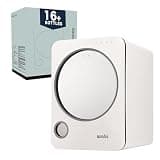
UV sterilizers use ultraviolet-C light at 254nm, which damages bacterial and viral DNA. The technology is genuinely effective — UV-C is used in hospital water purification — but effectiveness depends critically on direct line-of-sight exposure. Any surface not directly in the UV beam is not sterilised. Inside a bottle, the narrow neck, nipple holes, and internal threads of a cap can create gaps. For baby bottles specifically, this matters more than most UV product literature acknowledges.
For daily bottle sterilisation, steam's full-chamber coverage is the deciding factor. If you are sterilising Dr Brown's bottles with their multi-part anti-colic systems, or any bottle with internal venting, steam reaches every component without you needing to disassemble and position each piece carefully. UV works well for flat, open items — dummies, spoons, teething rings — where every surface faces the lamp directly.
Speed and convenience
UV sterilizers leave items dry after each cycle. There is no moisture in the chamber, no wait for things to cool down before use, and no residual water that can allow recontamination if bottles are left open. For parents who need a bottle ready quickly, this is a practical advantage.
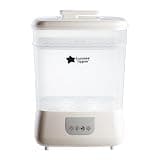
Steam sterilizers complete a cycle in 6–8 minutes but leave moisture inside the chamber. Most manufacturers recommend leaving the lid closed until you need the bottle, as the environment inside remains technically sterile. If bottles need to be pre-dried — for powdered formula preparation, which requires dry equipment — a combined sterilizer and dryer unit or a separate drying rack is needed.
The convenience gap narrows significantly if you choose a steam sterilizer with an integrated drying function — units like the Philips Avent 3-in-1 offer a steam-then-dry cycle that handles both steps. But if your routine involves grabbing a bottle at 3am and needing it immediately ready, the UV unit's dry output is a genuine time saver that no amount of clever steam-unit design fully eliminates.
Long-term reliability
Steam sterilizers are mechanically simple: a water reservoir, a heating element, and a chamber. The main maintenance is descaling with white vinegar or citric acid to remove mineral build-up. A quality unit bought at a reasonable price will reliably last 2–3 years of daily use.
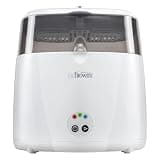
UV sterilizers have a more complex failure profile. The UV-C lamp has a rated lifespan — typically 5,000–8,000 hours — after which wavelength output degrades and kill rates drop without any visible indication to the user. Most consumer UV sterilizers do not include a lamp-health indicator, meaning the unit may appear functional while no longer sterilising effectively. Track usage hours and replace lamps on schedule, or choose a unit that monitors lamp health — at the budget end of the market, very few do.
For a product you will use multiple times every day for 12 months or more, reliability is not a secondary consideration. A steam sterilizer that costs £35 and requires occasional descaling is a more dependable daily workhorse than a UV unit that costs twice as much and has a consumable component most parents will forget to monitor. If you do choose UV, set a calendar reminder for lamp replacement — the unit will not tell you when it is time.
Where UV genuinely wins
UV sterilizers earn their place for heat-sensitive items that cannot go through steam. Some silicone soothers warp under repeated steam cycles. Breast pump components, electronic accessories, and wooden items obviously cannot be steamed. For these items, UV is the only safe sterilisation option.
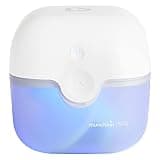
For travel, compact UV sterilising bags let you quickly sterilise a dummy or bottle without access to water, electricity, or a steam unit. This is where UV shines — not as a daily replacement for steam, but as a flexible complement to it. Many families use steam as the primary unit at home and a compact UV option for travel and top-up sterilisation.
The practical recommendation is to think of UV and steam as different tools for different jobs rather than competing alternatives. A compact UV bag in the nappy bag handles the dummy that hits the restaurant floor. The steam sterilizer at home handles the six bottles from the day's feeds. Trying to make UV do both jobs leads to the coverage gaps described above; trying to take a steam unit on a weekend away is impractical. Each technology has a specific role where it is clearly the right choice.
Can You Use One Instead of the Other?
There is genuine overlap for simple, open-surfaced items — dummies, flat teething toys, spoons, and anything where every surface faces outward. For these items, either a UV or steam sterilizer will do the job effectively. If all you are sterilising is a few soothers and small accessories, either technology works and the choice comes down to convenience.
The overlap breaks down with baby bottles. Steam fills the entire internal volume of a bottle — including the narrow neck, threaded cap interior, anti-colic valve channels, and nipple holes — in a way UV physically cannot. UV-C light travels in straight lines and does not bend around corners. For daily bottle sterilisation, steam cannot be substituted with UV without accepting coverage gaps on the most critical surfaces. Going the other direction, steam cannot substitute for UV when the item is heat-sensitive or when you need sterilisation away from a water supply and power outlet.
Many families end up using both — a steam sterilizer as the primary daily unit at home, and a compact UV bag or small UV unit for travel, daycare, and heat-sensitive items. This is not wasteful duplication; it is using each technology where it actually works best. If budget only allows one purchase and you are bottle-feeding, the steam sterilizer is the one to buy first. The UV bag can come later as a complement, not a replacement.
Related Tools Worth Knowing
- ›
Microwave Steriliser Bags — When you need to sterilise a bottle or dummy quickly using only a microwave — lighter and cheaper than a countertop unit for occasional use or travel.
- ›
Bottle Drying Rack — When bottles come out of a steam sterilizer wet and you need them dry for powdered formula preparation — keeps parts upright and drip-drying hygienically.
- ›
Sterilizer and Dryer Combo→ — When you want steam sterilisation and hot-air drying in a single appliance — eliminates the moisture issue that is steam's main drawback.
- ›
Cold Water Sterilising Tablets — When you have no electricity at all — camping, power cuts, or extended travel — dissolve a tablet in cold water and soak bottles for 30 minutes.
Our Top Picks
Best UV Sterilizer
Ready to buy? Check current prices below
Papablic 4-in-1 UV Light Sanitizer, Dryer and Storage Box
No heat, no moisture — sterilises with ultraviolet light
Bear Bottle Sterilizer and Dryer, 2-Layer Electric Steam Sanitizer
Fast, proven, and compatible with almost everything
Frequently Asked Questions
Is UV sterilisation as effective as steam for baby bottles?▾
UV-C sterilisation is effective but requires direct line-of-sight to every surface. Steam fills an entire chamber and reaches every surface regardless of shape. For bottles with narrow necks and valves, steam provides more reliable full coverage. UV is excellent for flat items, dummies, and accessories where every surface is exposed.
How long does a UV sterilizer lamp last?▾
Most UV-C lamps are rated for 5,000–8,000 hours. At 30 minutes of use per day that sounds like years, but most units run 5–10 minute cycles, meaning lamp output can degrade within 2–4 years of daily use — without any warning light.
Can you use a steam sterilizer for silicone soothers?▾
Yes, but repeatedly steaming silicone can cause some materials to degrade over time, especially lower-quality silicone. Check the manufacturer's guidelines. UV sterilisation is gentler on silicone for items you want to preserve over extended use.
Do you need to dry bottles after steam sterilisation?▾
Most manufacturers recommend leaving the lid closed until you need the bottle, as the environment inside remains sterile. If you need bottles pre-dried for formula preparation, look for a combined sterilizer and dryer unit.
Is steam sterilisation necessary past 12 months?▾
Most health guidelines recommend sterilising bottles until a baby is at least 12 months old. After that, normal dishwasher cleaning is sufficient. Some parents continue longer — there is no harm in it — but the intensive sterilisation regimen is primarily important in the first year.
Conclusion
For daily baby bottle sterilisation, the steam sterilizer is the right choice — it provides complete surface coverage on every bottle type, costs less to buy, has no consumable parts, and is backed by decades of clinical validation. UV sterilizers are a genuine complement for travel and heat-sensitive items, but they are not a like-for-like replacement for the daily sterilisation workload.
If you are setting up for bottle feeding and buying your first sterilizer, get a steam unit — the Philips Avent or Tommee Tippee models are proven, affordable, and widely supported. If you already own a steam sterilizer and find yourself needing to sterilise items on the go — dummies at restaurants, bottles at daycare, soothers in the car — a compact UV steriliser bag is the best addition you can make to the setup. If moisture is your main frustration with steam, consider a sterilizer-and-dryer combo unit before switching to UV entirely.
Check the top picks above for the best current options in each category. For most families, the best long-term setup is a steam sterilizer at home and a UV bag in the nappy bag — the right tool for each situation, no compromises on coverage where it matters most.
More Comparisons
Related Rankings
See the full ranking
←10 Best Baby Bottle Sterilizers of 2026