How Head to Head works
We compare two products or product types head to head, giving you a real verdict on which is the better choice for your situation — and exactly when to choose each one.
Air Fryer vs Deep Fryer: Which Actually Cooks Better?
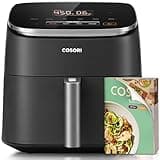
Cosori TurboBlaze Air Fryer, 9-in-1, 6 Qt, PFAS-Free Ceramic Coating | 90°-450°F, 5 Fan Speeds, Air Fry, Roast, Broil, Frozen, Bake, Dry, Proof, 95% Less Oil, Safety Lock, Dishwasher-Safe, 1725W
Little to no oil, crisp texture with far less mess


Chefman 4.5 Liter Deep Fryer w/Basket Strainer, XL Jumbo Size, Adjustable Temperature & Timer, Perfect for Fried Chicken, Shrimp, French Fries, Chips & More, Removable Oil-Container, Stainless Steel
True deep-fried texture and flavor, built for real batches
Our verdict — Air Fryer wins
For most home cooks, an air fryer is the better everyday choice — it gets close enough to fried texture for the vast majority of foods, uses a fraction of the oil, and doesn't leave the kitchen smelling like a takeaway shop. A deep fryer still wins on genuine, authentic fried texture — think proper battered fish and chips or funnel cake — and on cooking large batches at once, which makes it worth owning for anyone who fries food regularly and cares about getting it exactly right.
Buy Air Fryer if…
You want healthier, low-mess crispy food most of the time, and you don't regularly cook wet-battered dishes like tempura or classic fish and chips.
Buy Deep Fryer if…
You fry wet-battered foods regularly, cook for a crowd, and want authentic, restaurant-style fried texture rather than a close approximation.
Most people who buy an air fryer expecting deep-fried results end up disappointed by one specific category of food — wet-battered items — before realizing the two appliances aren't actually solving the same problem. An air fryer vs deep fryer comparison isn't really about which one "wins," since they use genuinely different cooking mechanisms and excel at different things.
An air fryer is a compact countertop convection oven that circulates hot air rapidly around food coated in a thin layer of oil, mimicking a crisp fried texture with a fraction of the fat. A deep fryer fully submerges food in hot oil, which is still the only way to get true fried texture on wet batters and delivers noticeably different flavor and crunch.
This article breaks down where each one genuinely outperforms the other, what foods expose the air fryer's limits, and which one makes more sense for your kitchen and cooking habits in 2026.
What is a Air Fryer?
An air fryer is essentially a compact, high-powered convection oven. A fan circulates air heated to 350–400°F rapidly around food sitting in a perforated basket, cooking it from all sides while a thin coating of oil (or often none at all) crisps the exterior. The mechanism is closer to a small convection oven than to actual frying, even though the branding leans heavily on the word "fry."

Key specs to check are basket capacity (measured in quarts — 4–6qt suits one to two people, 8qt+ for families), wattage (higher wattage generally means faster preheating and more consistent crisping), and whether it has a dedicated preheat cycle, which noticeably improves results on items like frozen fries or chicken wings.
An air fryer is the right choice for anyone who wants a healthier, lower-mess way to get crispy results on foods like fries, chicken wings, roasted vegetables, and reheated leftovers. It's also a strong pick for smaller households, since most models are sized for one to three servings at a time rather than large batches.
What is an Electric Deep Fryer?
An electric deep fryer heats a reservoir of oil to a set temperature — typically 325–375°F — and fully submerges food in it via a lowering basket. Complete oil immersion cooks food evenly on all sides simultaneously and, critically, is the only method that properly cooks a wet batter, since the batter sets and crisps the instant it hits hot oil rather than drying out slowly the way it would in circulating air.
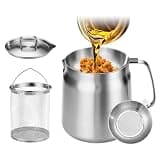
Important specs are oil capacity (larger reservoirs handle bigger batches without dramatically dropping temperature when food is added), recovery time (how fast the oil returns to temperature after food goes in), and whether it includes a built-in filtration or oil-storage system, which meaningfully extends how many uses you get from a batch of oil.
A deep fryer is the right choice for anyone who fries wet-battered foods regularly — fish and chips, tempura, funnel cake, doughnuts — or who fries in genuine batches for a family or gathering. It's overkill for someone who mainly wants crispy fries or reheated pizza a couple times a week.
Key Differences
Pros & Cons
Air Fryer
- ✓Uses a fraction of the oil of true deep frying, with noticeably less fat in the finished food
- ✓Cleanup is dramatically easier — no oil disposal, just a wipeable or dishwasher-safe basket
- ✓Doubles as a compact convection oven for roasting, reheating, and baking small items
- ✗Wet-battered foods like tempura or classic fish and chips don't crisp the same way — batter can dry out or partially slide off
- ✗Limited to a single layer in the basket, so cooking for a crowd means multiple batches
Deep Fryer
- ✓The only method that properly cooks wet batter, delivering genuine, authentic fried texture and crunch
- ✓Full oil submersion cooks food evenly on all sides at once, without flipping or shaking
- ✓Handles much larger batches per cook, better suited to feeding a family or group at once
- ✗Requires far more oil per use, along with the added cost and hassle of storing, filtering, or disposing of it
- ✗Leaves a noticeable fried-oil smell in the kitchen that lingers well after cooking is done
Texture and how close it gets to true deep-frying
For dry-coated foods — frozen fries, breaded chicken tenders, roasted vegetables — an air fryer gets remarkably close to true fried texture, often close enough that most people can't reliably tell the difference in a blind taste test. The rapid, circulating hot air crisps the exterior effectively because there's already a stable coating (breading, starch, or the food's own surface) for it to work on.

Presto 05420 FryDaddy Electric Deep Fryer | Kitchen Appliances, 4 Cups, Aluminum, Deep Fryers, Electric Deep Fryers, Countertop Fryers, Handy scoop lifts
See price →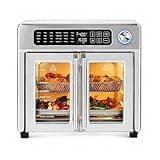
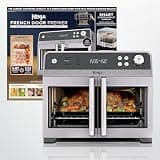
Emeril Lagasse 26QT French Door Multi-Function Air Fryer Toaster Oven | 26QT air fryer oven with French doors, 24 cooking functions, dual-speed fan and rotisserie for easy family meals.
See price →Wet batter is where the gap becomes obvious. A beer-battered fish fillet or tempura vegetable relies on the batter hitting hot oil instantly to set and puff — in an air fryer, that same batter tends to dry out unevenly, slide partially off, or set in a pale, gummy texture rather than a crisp golden shell. This isn't a matter of technique; it's a fundamental limitation of circulating air versus oil immersion.
If your fried-food cravings are mostly fries, wings, and breaded items, the air fryer's texture is genuinely close enough for daily use. If you specifically want proper battered fish and chips or funnel cake at home, a deep fryer isn't optional — it's the only appliance that actually delivers that texture.
Oil use, mess, and cleanup
An air fryer typically uses a tablespoon of oil or none at all, which means no oil to buy in bulk, no reservoir to maintain, and no disposal question after cooking. Cleanup is usually just the basket, which is dishwasher-safe on most models — a five-minute job rather than a production.
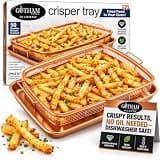
Air Fryer Basket For Oven, Gotham Steel Air Fryer Tray, 2 Piece Nonstick Copper Crisper Tray, Air Fry For Convection Oven, Also Great For Baking & Crispy Foods, Dishwasher Safe –X-Large, 16.5" x 12.5"
See price →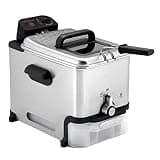
T-fal Deep Fryer with Basket, 3.5L, 1700W, Oil Filtration, Temp Control | Stainless steel exterior, 300-375 F temp range, Locking lid with viewing window, Countertop electric fryer
See price →A deep fryer requires several cups of oil at minimum, and that oil needs to be filtered or replaced periodically as it breaks down with repeated use and picks up flavors from whatever's been fried in it. Some models include built-in filtration systems that extend oil life and simplify storage, but even with those, there's meaningfully more involved than wiping down a basket — cooled oil needs straining, storing, or responsible disposal.
For anyone who fries food only occasionally, the oil-management overhead of a deep fryer is a real deterrent that an air fryer simply removes from the equation. For someone frying multiple times a week, a good filtration system narrows this gap considerably, since the oil gets reused rather than replaced each time.
Versatility beyond frying
An air fryer is functionally a small convection oven, which means it handles far more than crisping — roasting vegetables, reheating leftover pizza without sogginess, baking small batches of cookies, or even toasting. Many households end up using it more for reheating and roasting than for anything resembling traditional frying.

Ninja® Flip Toaster Oven & Air Fryer, Large Capacity, Stainless, SP151 | Stores Upright to Free Counter Space, Family Meals for Four in About 20 Minutes, Uses Less Power than a Standard Oven
See price →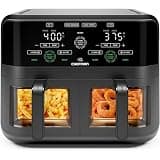
CHEFMAN 6 Quart Dual Basket Air Fryer Oven with Easy View Windows, Sync Finish, Hi-Fry, Auto Shutoff, 2 Independent 3Qt Nonstick Dishwasher Safe Frying Baskets, Digital Double Air Fryer - Black
See price →A deep fryer does one thing — frying in hot oil — and does it well, but that's the extent of its function. It can't roast, bake, reheat, or dry-crisp anything, and once you're not actively frying, it's simply a container of oil taking up counter or cabinet space.
If counter space or appliance count matters to your kitchen, the air fryer's dual role as both a fryer-alternative and a mini convection oven makes it the more space-efficient purchase for most households, even setting aside the health and mess advantages.
Batch size and cooking for a crowd
Air fryer baskets cook in a single layer for even results — stacking or overcrowding food blocks airflow and produces uneven, soggy results rather than the crisp texture you're aiming for. For a family of four wanting a full batch of fries or wings at once, that often means cooking in two or three separate rounds, which adds real time to a meal.
Chefman 4.5 Liter Deep Fryer w/Basket Strainer, XL Jumbo Size, Adjustable Temperature & Timer, Perfect for Fried Chicken, Shrimp, French Fries, Chips & More, Removable Oil-Container, Stainless Steel
See price →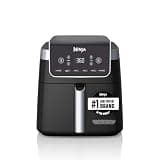
Ninja Air Fryer XL with MaxCrisp, 6.5 Qt, 6-in-1, Grey, AF181 | Max crisp, air fry, roast, bake, reheat, dehydrate, 1750W, 450F max, Fits 9 lbs wings
See price →A deep fryer's oil bath cooks food evenly regardless of how much is submerged, within the fryer's oil capacity — meaning a full batch for a family or a small gathering can genuinely go in and come out together, rather than in shifts. This is one of the clearest, least debatable advantages a deep fryer holds over an air fryer.
If you regularly cook for a group and want everything ready at the same time, a deep fryer's batch capacity is a meaningful practical advantage that no amount of air fryer capacity upgrades fully closes, since basket depth for airflow is still the limiting factor either way.
Can You Use One Instead of the Other?
For the vast majority of home frying — fries, wings, breaded chicken, roasted vegetables, reheated takeout — an air fryer covers the job convincingly, and most people who buy one stop reaching for a deep fryer, or don't own one at all, without feeling like they're missing much.
Where an air fryer genuinely cannot substitute is wet-battered food. Tempura, classic beer-battered fish, funnel cake, and doughnuts all rely on oil immersion to set the batter properly — attempting these in an air fryer produces a noticeably inferior result no matter how carefully you adjust technique or temperature. If these dishes matter to you, there's no real workaround.
Most households are well served owning just an air fryer and accepting that occasion-specific fried foods are a restaurant or special-occasion treat. For households that fry wet-battered foods regularly enough to justify a second appliance, a compact deep fryer used a few times a month, alongside a daily-use air fryer, covers both needs without much compromise.
Related Tools Worth Knowing
- ›
Convection Toaster Oven — Overlaps significantly with an air fryer's roasting and reheating functions, with more capacity for baking sheets and larger dishes.
- ›
Kitchen Utensil Set→ — A slotted turner and tongs make handling hot, crisped food from either appliance considerably easier and safer.
- ›
Instant-Read Thermometer — Essential for deep frying specifically, to confirm oil has returned to temperature between batches and food is fully cooked through.
- ›
Silicone Spatulas→ — Useful for turning delicate items and scraping crumbs out of an air fryer basket without scratching the nonstick coating.
Our Top Picks
Best Air Fryer
Best Deep Fryer
Ready to buy? Check current prices below
True deep-fried texture and flavor, built for real batches
Frequently Asked Questions
Is air fryer food actually healthier than deep-fried food?▾
Yes, meaningfully — air-fried food absorbs a fraction of the oil that deep-fried food does, which translates directly to lower fat content in the finished dish. The texture and flavor won't be identical to true deep frying, but the health difference is real and well-documented.
Can you put wet batter in an air fryer?▾
Not successfully in most cases — wet batter needs oil immersion to set and crisp properly, and in an air fryer it tends to dry out unevenly, slide off, or turn out pale and gummy rather than crisp. Dry coatings like breadcrumbs or a light flour dusting work far better in an air fryer.
Is a deep fryer worth it for occasional use?▾
It depends on what you're frying. If you occasionally want proper battered fish and chips or funnel cake, a deep fryer is genuinely worth it since nothing else replicates that texture. If your occasional frying is mostly fries or wings, an air fryer covers that need without the oil management hassle.
Do air fryers actually save money on oil over time?▾
Yes — using a tablespoon of oil or none per use versus several cups for deep frying adds up significantly over months of regular cooking. The savings on oil alone can offset a meaningful portion of an air fryer's purchase price for households that fry food often.
How much food can an average air fryer basket hold?▾
A standard 4-6 quart air fryer basket comfortably fits one to two servings in a single, evenly-cooked layer — roughly enough fries or wings for two people. Larger 8-quart-plus models or dual-basket designs handle three to four servings, but cooking for a full family often still means multiple batches.
Conclusion
For nearly all everyday frying needs, an air fryer is the better choice — less oil, easier cleanup, and texture that's close enough to fried for the vast majority of foods people actually crave.
If proper battered fish and chips, tempura, or frying in real batches for a group matters to you specifically, a deep fryer remains the only appliance that delivers that exact result — no air fryer workaround fully replicates it. Many serious home cooks eventually own both: an air fryer for daily use, a deep fryer for the occasions that call for it.
Check the top picks above for well-reviewed options at each price point, or consider a combo appliance if counter space is limited and you want a taste of both worlds in one unit.