How Head to Head works
We compare two products or product types head to head, giving you a real verdict on which is the better choice for your situation — and exactly when to choose each one.
Orthopaedic Dog Bed vs Elevated Dog Cot for Senior Dogs — Which Is Better in 2026?
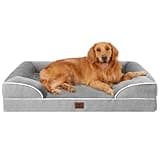
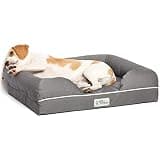
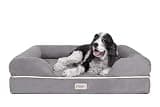
EHEYCIGA Orthopedic Dog Beds Large Sized Dog, Waterproof Memory Foam Pet Bed with Sides, Non-Slip Bottom Large Pet Bed with Washable Removable Cover, Grey
Joint support that holds up under real weight

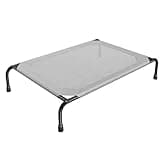
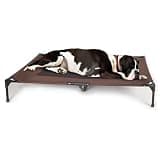
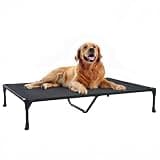
Simple Trending Raised Dog Bed for Large Dogs, Waterproof XL Dog Cot, Grey
Airflow, durability, and easy cleaning
Our verdict — Orthopaedic Bed wins
For an elderly medium dog, the orthopaedic bed wins without much debate. Proper foam distributes weight evenly across hips and shoulders, reducing the pain of lying down and getting up — the two movements that cause most discomfort in ageing joints. An elevated cot suspends the dog above the floor and manages heat, but it provides no meaningful cushioning. For a senior dog, that matters.
Buy Orthopaedic Bed if…
Your dog is over seven years old, shows any stiffness after rest, is a medium or large breed, or you want a bed that actively supports joint health.
Buy Elevated Cot if…
Your dog is structurally healthy, lives in a warm climate or sleeps outdoors, is a determined chewer that destroys fabric beds, or you need a bed that wipes clean instantly.
Your eleven-year-old Labrador takes three attempts to lower herself onto her bed, pauses halfway, then drops the last six inches because her hips gave out. You search for a better bed and immediately land on two options that look nothing alike and solve completely different problems — and most product pages do a poor job of explaining which one your dog actually needs.
An orthopaedic memory foam dog bed uses viscoelastic foam to distribute your dog's weight across the entire sleeping surface, reducing pressure on joints, hips, and shoulders. An elevated dog cot suspends the dog on a taut mesh or fabric surface above the floor, creating airflow underneath and providing a firm, easy-to-clean platform. They occupy the same product category but address fundamentally different concerns: one is about cushioning and joint relief, the other is about temperature, hygiene, and durability.
This article breaks down orthopaedic dog bed vs elevated dog cot across joint support, cleaning, durability, and temperature management — so you can match the right bed to your dog's actual condition and living situation in 2026, not just buy whatever has the best reviews.
What is a Orthopaedic Memory Foam Dog Bed?
An orthopaedic dog bed uses viscoelastic memory foam — the same pressure-distributing material found in human orthopaedic mattresses — as its primary sleeping surface. When your dog lies down, the foam conforms to their body shape and spreads their weight across the full contact area rather than concentrating it at bony pressure points like elbows, hips, and shoulders. The result is reduced joint compression during sleep and visibly easier transitions when lying down and standing up, which are the two movements that cause the most pain in ageing dogs.
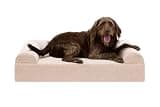
The specs that matter when buying are foam density (at least 30 kg/m³ for a medium dog — anything below compresses permanently within months), total foam thickness (7–10 cm is the working range; thinner beds bottom out under real weight), and cover design (a zip-off, machine-washable cover with a waterproof liner is non-negotiable for an older dog). Some beds add a cooling gel top layer, which is worth considering if your dog runs warm. Avoid beds that list only "memory foam" without a density figure — the omission usually means the foam is cheap reflex foam that will not hold its shape.
An orthopaedic bed is the right choice for any dog over seven years old, any dog showing stiffness after rest, breeds predisposed to hip dysplasia or arthritis (German Shepherds, Labradors, Golden Retrievers, Rottweilers), and any dog recovering from joint surgery. It is not a luxury for these dogs — it is the single most impactful change you can make to their daily comfort outside of veterinary treatment.
What is an Elevated Dog Cot?
An elevated dog cot raises your dog off the ground on a taut fabric or mesh surface stretched across a metal frame — typically aluminium or powder-coated steel. The dog's weight is distributed by the tension of the fabric rather than by cushioning, similar to a camping cot or hammock. Air circulates freely underneath, which keeps the dog cooler than any ground-level bed and prevents the moisture build-up that causes odour in foam beds used outdoors or in warm rooms.
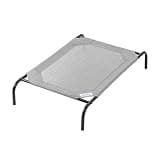
Key specs to evaluate are frame material (aluminium is lighter and rust-proof; steel is cheaper but heavier and can corrode outdoors), fabric type (breathable mesh for maximum airflow, or solid polyester for more support and weather resistance), weight capacity (ensure it exceeds your dog's weight by at least 30% — fabric sag is the primary failure mode), and leg height (15–25 cm is standard; taller legs improve airflow but reduce stability for dogs that jump onto furniture). Replacement fabric decks are available for most brands, which extends the usable lifespan indefinitely.
An elevated cot is the right choice for healthy dogs in warm climates, dogs that sleep outdoors or in garages, breeds that overheat easily (Bulldogs, Pugs, Huskies in summer), destructive chewers that shred fabric beds within weeks, and households where easy cleaning is a priority — muddy paws, incontinence, or multi-dog environments where beds need hosing down regularly.
Key Differences
Pros & Cons
Orthopaedic Bed
- ✓Distributes a 15–25 kg dog's weight across the full sleeping surface — measurably reduces pressure on hips, elbows, and shoulders
- ✓Visibly easier getting-up-and-lying-down transitions for dogs with arthritis, hip dysplasia, or post-surgical joint stiffness
- ✓Bolster-style options support head and neck positioning during sleep, reducing neck strain in older dogs
- ✗Foam degrades over time — even quality 30 kg/m³ viscoelastic foam loses support after 3–5 years and must be replaced
- ✗Retains body heat, which can make warm-running breeds uncomfortable without a cooling gel layer
Elevated Cot
- ✓Aluminium or steel frame lasts 5+ years without structural degradation — replacement fabric decks extend lifespan indefinitely
- ✓Wipes clean in under a minute — mud, moisture, and odour do not soak into the surface the way they do with foam
- ✓Airflow underneath keeps dogs noticeably cooler in warm climates, warm rooms, or during summer months
- ✗Provides zero cushioning — fabric tension applies pressure at the same contact points as a hard floor, offering no joint relief
- ✗Mesh fabric can sag within 12–18 months on budget models, creating an uneven sleeping surface that worsens with weight
Joint support
An orthopaedic bed uses viscoelastic memory foam — the same material in human orthopaedic mattresses — which spreads a 15–25kg dog's weight across the entire sleeping surface rather than concentrating it at contact points. For an elderly dog, the result is visibly easier movement getting in and out of bed, and typically less stiffness in the first hour after waking.
An elevated cot suspends the dog on a mesh or fabric surface under tension. It distributes weight consistently across the frame — like a trampoline — but provides no cushioning. For a young, healthy dog this is fine. For a dog with hip dysplasia, arthritis, or eleven years of accumulated joint wear, a cot offers no meaningful improvement over a hard floor. It solves a different problem.
If your dog is showing any signs of joint stiffness — slow to rise, reluctant to jump, limping after rest — the orthopaedic bed is the only option here that addresses the cause. A veterinary consultation is worth the visit to confirm whether joint support alone is sufficient or whether supplements or medication should accompany the bed change. The bed is the foundation, but it works best as part of a complete joint-care approach.
Hygiene and cleaning
Elevated cots wipe clean in under a minute. Mud, dirt, and moisture do not soak into the surface. For dogs that come in from outside muddy, or dogs that are incontinent, this is a significant practical advantage. The aluminium or steel frame does not absorb odours or harbour bacteria in the same way soft materials can.
Orthopaedic beds typically have a removable, machine-washable cover. The foam base is not machine washable and should not be soaked. Covers need to come off and go in the wash regularly — if the cover is poorly designed or difficult to remove and replace, this becomes a deterrent to cleaning as often as necessary. Choose a bed with an easy-access zip and a cover that dries quickly.
For multi-dog households or dogs with ongoing incontinence issues, the cleaning advantage of the cot is substantial over time. Washing a foam bed cover twice a week is realistic; doing it daily is not. If hygiene is the primary concern and joint support is secondary, the cot wins on practicality. If you need both, look for an orthopaedic bed with a waterproof liner between the foam and the cover — this protects the foam core while the cover handles the surface mess.
Durability
Quality elevated cots use aluminium or steel frames that last years without bending or corroding. The failure point is the mesh or fabric deck, which eventually sags as tension relaxes. Premium cots use a reinforced weave or rigid platform surface — these last indefinitely. Budget cots with standard mesh typically sag noticeably within 12–18 months.
Orthopaedic beds have a finite foam lifespan. Quality viscoelastic foam (density of at least 30kg/m³) holds its shape for 3–5 years. Below that density, the foam compresses and stays compressed within months under a medium dog. The test: press your palm firmly into the bed. It should return to its shape slowly and fully in 3–5 seconds. If it springs back instantly, it is cheap reflex foam. If it stays flat, it has already failed.
The practical difference is replacement cost and frequency. A cot frame is a one-time purchase; replacement fabric decks cost £10–20 and take five minutes to install. An orthopaedic bed is a complete replacement every 3–5 years at £40–80 each time. Over a ten-year dog lifespan, the cot costs less to maintain — but if your dog needs joint support, the foam bed's replacement cycle is a necessary ongoing expense, not an optional one.
Temperature management
Elevated cots create airflow underneath the dog — genuinely useful in warm climates, warm rooms, or for breeds that run hot. The mesh surface does not trap heat the way foam can. For outdoor dogs in summer, or short-faced breeds that struggle to regulate temperature, this is a real benefit and the cot may be the right choice regardless of age.
Orthopaedic foam can retain heat, which some dogs dislike. If your elderly dog runs hot and the joint support of an orthopaedic bed is also needed, look for orthopaedic beds with a cooling gel layer in the top foam. These combine proper pressure relief with some temperature management — the right product for that specific dog, not a compromise.
For dogs that need both cooling and joint support, the best practical solution is a cooling-gel orthopaedic bed placed in a well-ventilated area of the house, away from radiators and direct sunlight. If that is not enough — particularly for brachycephalic breeds in summer — consider using an elevated cot as a daytime rest spot and the orthopaedic bed for overnight sleep, when joints stiffen most and temperature is lower.
Can You Use One Instead of the Other?
For a young, healthy dog with no joint concerns, either bed works as a sleeping surface — the choice comes down to climate, cleaning preference, and whether your dog is a chewer. In warm environments with easy-clean priorities, the cot is the better default. In cooler homes where comfort is the priority, the foam bed is a nicer place to sleep even for a dog that does not need the orthopaedic benefit.
Where they cannot substitute for each other is specific: an elevated cot cannot provide joint support for an arthritic or elderly dog. The taut fabric distributes weight evenly but offers no cushioning — a senior dog on a cot is functionally sleeping on a firm surface with airflow, which does nothing for the hip and shoulder pain that worsens during rest. Conversely, an orthopaedic bed cannot match a cot's cooling or cleaning properties, and in hot climates a foam bed can become uncomfortably warm.
One practical hybrid that works well: place a thin memory foam topper (3–4 cm) on top of an elevated cot. This gives moderate cushioning with airflow underneath — not as much joint support as a full orthopaedic bed, but meaningfully better than a bare cot for a dog with mild joint stiffness. It is a reasonable compromise for a dog that runs hot but is starting to show early signs of age-related joint wear.
Related Tools Worth Knowing
- ›
Heated Dog Bed — When your arthritic dog needs warmth to loosen stiff joints during winter — a heated bed maintains a constant low temperature that eases morning stiffness.
- ›
Waterproof Dog Bed→ — When incontinence or heavy drooling is ruining foam beds faster than covers can protect them — a fully waterproof bed survives what a removable cover cannot.
- ›
Calming Donut Dog Bed — When your dog is anxious and needs the security of a bolstered enclosure — the raised rim provides a sense of nesting that flat beds and cots cannot.
- ›
Outdoor Weatherproof Dog Bed — When the bed lives permanently outside — UV-resistant fabric, rust-proof frame, and drainage that handles rain without degradation.
Our Top Picks
Best Orthopaedic Dog Bed
Best Elevated Dog Cot
Ready to buy? Check current prices below
Joint support that holds up under real weight
Simple Trending Raised Dog Bed for Large Dogs, Waterproof XL Dog Cot, Grey
Airflow, durability, and easy cleaning
Frequently Asked Questions
Can an elevated cot make joint problems worse in an elderly dog?▾
Not worse directly, but it provides no relief. The mesh tension applies pressure at contact points — elbows, hips, shoulders — without any cushioning. For an arthritic dog this means no improvement over sleeping on a hard floor. The real risk is believing you have solved the problem and stopping the search for the right solution.
How do you know if an orthopaedic bed has good quality foam?▾
Press your palm firmly into the centre and hold for five seconds. When you remove your hand, the foam should return to shape slowly — taking 3–5 seconds. If it springs back immediately it is cheap PU foam. If it stays compressed it has already failed. Look for a density specification of at least 30kg/m³ for a medium dog.
My elderly dog refuses to use his new bed — what am I doing wrong?▾
Dogs that have spent years sleeping on a hard surface often do not immediately understand that a soft bed is comfortable. Place the new bed exactly where the old one was, put a worn t-shirt with your scent on it, and give it two weeks. Most dogs convert once the foam has taken on their own scent.
Is a bolster orthopaedic bed better than a flat one for an elderly dog?▾
For most elderly dogs, yes. The bolster rim gives them something to rest their head and neck against, reducing neck strain during sleep. The only concern is the entry step — if your dog has significant mobility issues, choose a bed with a lowered or cut-out entry point.
How often should I replace the orthopaedic bed?▾
A quality foam bed lasts 3–5 years. Replace it when pressing on the surface brings you close to the base, or when you can feel the floor through the foam. For an elderly dog, do not wait for visible deterioration — they cannot tell you the support has gone.
Conclusion
For a senior dog or any dog with joint concerns, the orthopaedic memory foam bed is the right choice — it is the only option in this comparison that provides meaningful pressure relief for hips, shoulders, and elbows during the hours of rest that matter most for ageing joints.
If your dog is healthy and under seven, lives in a warm climate, sleeps outdoors, or destroys soft beds, get the elevated cot — it lasts longer, cleans easier, and keeps the dog cooler. If your dog is older with early joint stiffness but also runs hot, consider a cooling-gel orthopaedic bed, or use a cot with a foam topper as a daytime compromise while keeping the orthopaedic bed for overnight sleep. The worst decision is buying a cot for a dog that needs joint support because the cot looked more durable or had better reviews — durability does not matter if the bed is not solving the right problem.
Check the top picks above for the best current options in each category. Whichever bed you choose, test the foam with your palm before trusting it to your dog, and replace it the moment it stops returning to shape — your dog cannot tell you the support has gone.
More Comparisons
Related Rankings
See the full ranking
←10 Best Dog Beds for Medium Dogs of 2026