How Head to Head works
We compare two products or product types head to head, giving you a real verdict on which is the better choice for your situation — and exactly when to choose each one.
Electric Pressure Washer vs Petrol Pressure Washer: Which Is Right for Home Use?
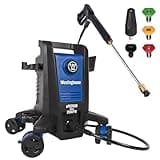
Westinghouse ePX3500 Electric Pressure Washer, 2500 Max PSI 1.76 Max GPM with Anti-Tipping Technology, Onboard Soap Tank, Pro-Style Steel Wand, 5-Nozzle Set, for Cars/Fences/Driveways/Home/Patios
Quiet, low-maintenance, and sufficient for most driveways

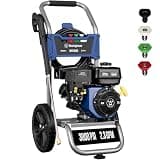
Westinghouse WPX3000 Gas Pressure Washer, 3000 PSI and 2.3 GPM, Spray Gun and Wand, 4 Nozzle Set, for Cars/Fences/Driveways/Homes/Patios/Furniture
Maximum power, no cable — built for commercial and agricultural use
Our verdict — Electric wins
For home use — driveways, patios, cars, garden furniture, fences — an electric pressure washer is the right choice for the overwhelming majority of people. Modern electric models deliver 130–180 bar of pressure, which is sufficient to clean every domestic surface effectively, including green algae on block paving and oil stains on concrete. They start instantly, require no fuel, produce no fumes, and need virtually no maintenance. Petrol pressure washers are more powerful and fully portable, but that power is designed for agricultural buildings, commercial forecourts, and industrial equipment — applications where electric supply is unavailable and surface area is vast.
Buy Electric if…
You are cleaning domestic surfaces — driveway, patio, car, bike, decking, garden furniture — from a residential property.
Buy Petrol if…
You need to clean large agricultural or commercial surfaces far from a power supply, or you run a cleaning or valeting business.
Somebody stands in a hardware store staring at two pressure washers — one half the price of the other — and assumes the expensive petrol model must be the better machine for their patio. They buy it, wrestle it home, discover it needs fuel mixing and oil checks before it will even start, and then blast a permanent stripe into their block paving because 250 bar is roughly twice the pressure a residential surface can handle safely. The cheaper electric model would have done the job better in every measurable way.
An electric pressure washer plugs into a standard outdoor socket and delivers 130–180 bar of pressure through a motor that starts instantly and runs quietly. A petrol pressure washer uses a combustion engine — pull-cord start, fuel tank, exhaust fumes — to generate 200–300 bar and operate independently of mains power. The electric machine is designed for domestic surfaces cleaned a handful of times per year. The petrol machine is designed for commercial and agricultural work where power supply is unavailable and the surfaces are measured in hundreds of square metres.
This article breaks down exactly where each type performs, what the running costs look like over five years, and which one to buy for your specific situation in 2026. If you are cleaning a residential driveway, patio, car, or fence, the answer is almost certainly simpler and cheaper than you expect.
What is a Electric Pressure Washer?
An electric pressure washer connects to a standard garden hose for water supply and a 13-amp household socket for power. An electric motor drives a pump that pressurises the water to between 130 and 180 bar depending on the model, pushing it through a high-pressure hose and out of an adjustable lance or nozzle. The motor runs only while the trigger is pulled — release it and the machine idles silently, using no power. The entire system is sealed and self-contained: no fuel, no exhaust, no oil reservoir. You plug it in, connect the hose, and squeeze the trigger.
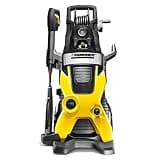
The key specifications to compare when buying are maximum pressure in bar (130 bar is entry-level, 150–160 bar is mid-range, 180 bar is premium domestic), flow rate in litres per minute (higher flow cleans faster across large areas — look for 6–8 L/min), and motor wattage (1,400W–2,100W for home models). Hose length matters more than most buyers expect: a 6-metre hose forces constant repositioning, while a 9–12 metre hose lets you clean an entire driveway section without moving the machine. An integrated detergent tank is useful for car washing and pre-treating heavily soiled surfaces.
Electric pressure washers are the right choice for anyone cleaning residential surfaces: driveways, patios, decking, garden furniture, cars, motorbikes, bicycles, wheelie bins, and fences. They handle moss, algae, oil stains, mud, bird droppings, and general weathering without difficulty. If you have an outdoor power socket — or can run a suitably rated extension lead — an electric machine will cover every cleaning task a homeowner encounters.
What is an Petrol Pressure Washer?
A petrol pressure washer uses a small combustion engine — typically a four-stroke Honda, Loncin, or Lifan unit — to drive a high-pressure pump independently of mains electricity. The engine runs on unleaded petrol, requires regular oil changes, and starts via a pull-cord mechanism. Because there is no dependency on a power socket, a petrol machine can operate anywhere: remote fields, construction sites, agricultural yards, and commercial properties with no convenient electrical supply. The trade-off is noise, exhaust fumes, and the ongoing maintenance demands of a combustion engine.
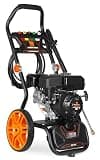
Key specifications for petrol models are maximum pressure in bar (200–300 bar for professional units), flow rate (typically 10–15 L/min — significantly higher than electric), engine displacement in cc (larger engines sustain higher pressure without strain), and pump type (axial pumps are cheaper but wear faster; triplex plunger pumps are built for sustained commercial use). Weight is a practical factor: a quality petrol pressure washer weighs 30–50 kg, compared to 5–15 kg for a domestic electric unit. Fuel tank capacity determines continuous runtime — most models run 2–4 hours on a full tank.
Petrol pressure washers are built for professional and commercial applications: cleaning agricultural buildings and equipment, stripping industrial surfaces, washing commercial vehicle fleets, and servicing large properties where electric supply is unavailable or impractical. Mobile valeting businesses, farm maintenance operations, and construction site cleanup crews rely on petrol machines because no other option provides the combination of high pressure, high flow rate, and total portability that these jobs demand.
Key Differences
Pros & Cons
Electric
- ✓Starts instantly from a standard 13-amp socket — no fuel, no pull-cord, no warm-up delay
- ✓Virtually zero maintenance over its lifetime — flush the pump, store dry, and it works next time
- ✓130–180 bar covers every domestic cleaning task including block paving algae and concrete oil stains
- ✗Tethered to a power socket — maximum reach is limited by hose length and extension lead rating
- ✗Lower flow rate than petrol models means large commercial areas take significantly longer to cover
Petrol
- ✓200–300 bar with 10–15 L/min flow rate — cleans heavy industrial soiling that electric machines cannot shift
- ✓Fully portable with no dependency on mains power — operates anywhere a fuel tank can reach
- ✓Built for sustained commercial use — triplex pump models run for hours under continuous load without overheating
- ✗Produces carbon monoxide exhaust and significant noise — cannot be used in enclosed or semi-enclosed spaces
- ✗Requires ongoing engine maintenance: oil changes, spark plugs, air filters, fuel stabilisation for storage
Cleaning power for domestic surfaces
A mid-range home electric pressure washer delivers 130–160 bar with flow rates of 6–8 litres per minute. Cleaning block paving of moss and algae requires around 120–140 bar. Washing a car safely requires 80–100 bar. Stripping paint from brickwork requires around 150 bar. Every standard domestic task falls within the range of a quality electric machine.
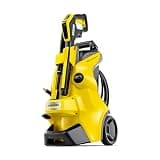
Petrol machines start at 200 bar and reach 250–300 bar in commercial models. That additional pressure is designed for concrete agricultural floors covered in slurry and large commercial vehicles — surfaces a homeowner will simply never clean. On a residential patio or car, petrol-level pressure requires careful nozzle management to avoid etching the surface or stripping sealant. More pressure is not always better.
The practical takeaway is straightforward: if the surface you are cleaning is part of a house, garden, or domestic vehicle, an electric pressure washer delivers the right amount of force without risking damage. The extra 100–150 bar a petrol model provides is not headroom you will use — it is headroom that creates problems if applied carelessly to block paving, render, or painted surfaces.
Ease of use
Electric pressure washers plug in and start immediately. No fuel to mix or store, no pull-cord, no warm-up period, no oil level to check. Total setup and pack-down: under five minutes. Store it in a garage or shed, bring it out when needed.
Petrol pressure washers require fuel, oil level checks, and pull-cord starting that can be difficult in cold weather. They produce carbon monoxide and must be used outdoors or in well-ventilated spaces — not in a covered car port or garage. For a machine used infrequently, the maintenance demands of a petrol engine become a real friction point. Fuel left in the carburettor for weeks gums it up; fuel must be stabilised or run out before storage.
For a homeowner who pressure washes six to ten times per year, ease of use is not a minor consideration — it determines whether the machine actually gets used. An electric washer that takes two minutes to set up gets pulled out on a dry Saturday morning without a second thought. A petrol machine that needs fuel, oil checks, and a stubborn pull-cord in cold weather stays in the shed more often than it should, which means the driveway stays dirty longer than it needs to.
Running costs
A quality home electric pressure washer costs £80–200 to buy. Running costs are minimal: standard household electricity and occasional O-ring replacement. Most models require no servicing for their entire life.
Entry-level petrol machines start at £300 and quality models sit at £400–700. Running costs include fuel, engine oil, annual servicing (spark plug, air filter, oil change), and the increased likelihood of professional repair if the engine develops a fault. For a machine used six to ten times a year on a residential property, the total cost of ownership of a petrol model significantly exceeds electric over a five-year period. The premium is only justified when the machine earns money.
Over a five-year ownership period, an electric pressure washer used monthly costs roughly £150–250 in total including purchase price and electricity. A petrol model over the same period — purchase price, fuel, oil, filters, and at least one professional service — runs £500–900. That difference funds a second electric machine, a full set of attachments, or a quality surface cleaner that will halve your driveway cleaning time. The economics only shift in petrol's favour when the machine is generating revenue through commercial cleaning contracts.
When petrol makes sense
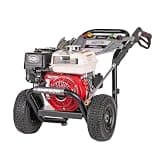
Petrol pressure washers have a genuine and specific use case: any job requiring continuous operation far from a power socket on large or heavily soiled surfaces. Farmers and smallholders cleaning outbuildings and slurry yards, tradespeople who need a professional machine with no dependency on site power, and mobile valeting businesses all benefit from petrol's portability and power.
If your garden has no outdoor socket, a long heavy-duty extension lead rated for the machine's wattage will handle most electric models — it is worth getting an outdoor socket installed rather than buying a petrol machine. If you are cleaning a patio on a Saturday morning, you do not need a commercial-grade machine. Buy the right tool for the job, not the most impressive one.
The honest test is this: if you are cleaning surfaces that take more than an hour of continuous spraying, if those surfaces are caked in agricultural or industrial soiling, and if there is no mains power within 30 metres, a petrol pressure washer is the right tool. If any one of those conditions does not apply — and for residential use, none of them typically do — the petrol machine is an expensive solution to a problem you do not have.
Can You Use One Instead of the Other?
For most residential cleaning tasks, the overlap between electric and petrol is near-total in terms of outcome — both will clean a patio, both will remove algae from block paving, both will wash a car. The difference is how they get there. An electric machine does it quietly, cheaply, and with zero setup friction. A petrol machine does the same job with more noise, more preparation, and more ongoing cost, but also with more raw power held in reserve.
Where one genuinely cannot substitute for the other is at the extremes. An electric pressure washer cannot clean a 500-square-metre agricultural yard caked in dried slurry — the flow rate is too low, the pressure insufficient for that level of soiling, and the power cable creates a hard radius limit. Equally, a petrol machine cannot be used safely in a covered car port or garage due to carbon monoxide emissions, and its 200+ bar output is actively dangerous on domestic surfaces like painted render, softwood decking, and vehicle bodywork without very careful nozzle management.
If you are a homeowner with standard domestic cleaning needs, buy electric and do not look back. If you run a farm, a mobile cleaning business, or maintain commercial property, petrol is the professional tool for the job. The crossover buyer — someone who wants portability for a large rural garden with no outdoor socket — should invest in having an outdoor socket installed rather than committing to the ongoing maintenance burden of a petrol engine for occasional domestic use.
Related Tools Worth Knowing
- ›
Surface Cleaner Attachment — For flat surfaces like driveways and patios — a rotating disc attachment that cleans evenly without the striping pattern left by a standard lance nozzle.
- ›
Patio Cleaner — When you need a dedicated machine for regular patio and decking maintenance without setting up a full pressure washer system each time.
- ›
Foam Cannon Lance — For pre-washing cars and vehicles — applies a thick layer of snow foam that loosens dirt before the pressure wash, reducing the risk of scratching paintwork.
- ›
Garden Hose Pressure Nozzle — When you need a quick rinse without setting up the pressure washer — a high-pressure nozzle on a standard garden hose handles light mud and dust on furniture and bins.
Our Top Picks
Ready to buy? Check current prices below
Quiet, low-maintenance, and sufficient for most driveways
Maximum power, no cable — built for commercial and agricultural use
Frequently Asked Questions
My patio is covered in black algae — will an electric model actually shift it?▾
Yes. Black algae and lichen responds to 130–160 bar with a surface cleaner attachment, which is within the range of mid-range electric machines. A surface cleaner (rotating disc attachment) is more effective than a lance for flat surfaces and avoids the striping pattern left by a single-nozzle approach.
Can I use a pressure washer to clean my car safely?▾
Yes, with the right nozzle. Use a wide-angle (25 or 40 degree) nozzle and keep the lance at least 30cm from bodywork. Never use a zero-degree pencil jet on paintwork — it strips paint and damages clear coat. Keep pressure below 100 bar for painted surfaces.
How important is bar pressure versus flow rate?▾
Both matter. Bar determines the force; flow rate determines the volume. A machine with very high pressure but a low flow rate cleans a small spot intensely. For domestic use, 130 bar at 7–8 litres per minute is a better practical specification than 160 bar at 5 litres per minute.
My garden has no outdoor power socket — does that rule out electric?▾
Not automatically. Most electric pressure washers run on a standard 13-amp socket and can use a heavy-duty outdoor extension lead rated for the machine's wattage. For frequent use, having an outdoor socket installed is a straightforward job for an electrician.
Do I need to winterise an electric pressure washer?▾
Yes — water in the pump and hose can freeze and cause damage. Run the system briefly to expel standing water before long winter storage, and store it in a frost-free environment. Beyond that, no special preparation is required.
Conclusion
For home use, the electric pressure washer wins on every metric that matters: purchase price, running costs, maintenance, noise, ease of use, and suitability for residential surfaces. A quality electric model in the 140–160 bar range will clean every domestic surface you throw at it — block paving, concrete, decking, render, cars, garden furniture — without the risk of surface damage that comes with petrol-level pressure.
If you clean a residential driveway and patio a few times per year, buy an electric pressure washer and spend the savings on a surface cleaner attachment that will halve your cleaning time on flat surfaces. If you run a farm, a mobile valeting business, or maintain commercial property far from mains power, a petrol machine with a triplex pump is the professional tool for the job. There is very little middle ground between those two use cases, and the middle ground that does exist — large rural gardens with no outdoor socket — is better solved by installing a socket than by committing to petrol engine maintenance.
Check the top picks above for the best current options. For most readers, the electric machine is not the compromise — it is the right tool, full stop.