How Head to Head works
We compare two products or product types head to head, giving you a real verdict on which is the better choice for your situation — and exactly when to choose each one.
Cordless Drill vs Impact Driver: Which Do You Actually Need?
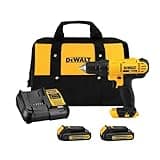
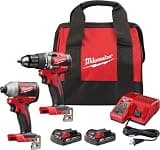
DEWALT 20V Max Cordless Drill Driver Set, 2 Speed, High Performance Motor, Includes 2 XR 1.3Ah Li-Ion Batteries, Charger and Contractor Bag (DCD771C2)
The versatile option — drills holes and drives screws

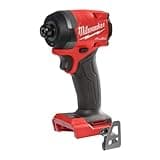
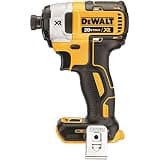
Milwaukee Electric - M18 Fuel. 1/4 HEX Impact Driver
Purpose-built for driving screws — faster and more powerful
Our verdict — Cordless Drill wins
For someone buying their first power tool, a cordless drill is the better starting point — it drills holes, drives screws, and covers around 90% of home DIY as a single purchase. An impact driver is faster and more powerful for driving screws specifically, but it cannot drill holes at all, which means anyone who only owns an impact driver will hit that wall sooner than expected. If you already own a drill and do significant screwdriving work — decking, timber structures, kitchen units — an impact driver is the best addition you can make to your kit, and a twin-pack from the same battery platform is better value than buying either tool separately.
Buy Cordless Drill if…
You own no power tools, or you need one tool that both drills holes and drives screws.
Buy Impact Driver if…
You already own a drill and want to significantly speed up screwdriving for timber work, decking, or any high-volume fastening job.
Most people buying their first power tool assume a drill is a drill — that any cordless driver is basically the same thing with a different name on the box. The difference between a cordless drill and an impact driver is not a matter of preference; they work through fundamentally different mechanisms, and choosing the wrong one means either a tool that cannot do what you need or a tool that does the job slowly and with more frustration than necessary.
A cordless drill uses continuous rotational torque through an adjustable chuck, which accepts standard round-shank drill bits and gives you control via a clutch. An impact driver delivers rotational force in short concussive bursts — up to 3,000 impacts per minute — through a fixed hex-shank collet. That makes it significantly more powerful for driving screws, but it cannot drill holes the way a drill can.
This article covers what each tool does, where the differences actually matter in real projects, and which one to buy first in 2026 — or whether a combo kit makes the whole decision irrelevant.
What is a Cordless Drill?
A cordless drill — more accurately called a drill driver — uses a rotating chuck to accept any round-shank or hex-shank bit. An electric motor delivers continuous rotational torque through a two-speed gearbox, with a clutch ring at the back that disengages the motor before screws go too deep. That clutch is what makes a drill the right tool for precision work: driving screws into chipboard without stripping the thread, fitting hinges without over-sinking, or drilling pilot holes without splitting timber close to an edge.
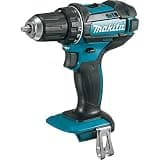
The main specs to focus on when buying are voltage (18V or 20V for home use, 12V for lighter tasks), whether the motor is brushless (longer life, more efficient — worth paying for if you'll use it regularly), and torque in Nm. A 40–60Nm drill handles everything most homeowners encounter. Two speed settings — typically 0–500 RPM and 0–2,000 RPM — let you control slow starts for precision work, which matters when drilling into masonry anchors or self-tapping metal screws.
A cordless drill is the right first tool for anyone who doesn't yet own any power tools. It covers the vast majority of home DIY tasks: hanging shelves, assembling flat-pack furniture, fitting door hardware, drilling cable runs, and general fixings. If you can only buy one tool, it should be a drill — and that will remain true until you find yourself driving screws by the hundred into hardwood.
What is an Impact Driver?
An impact driver looks similar to a drill but works through a completely different mechanism. Instead of continuous rotational torque, it uses an internal hammer-and-anvil that fires rapid concussive rotational impacts — typically 2,000–3,000 per minute — on top of the standard rotational force. The result is dramatically more effective at driving long screws into resistance without the motor stalling or the bit camming out of the screw head. The collet accepts hex-shank bits only; standard round-shank drill bits will not fit.
Key specs for an impact driver are maximum torque in Nm (80–200Nm for home use, higher for trade), IPM (impacts per minute — higher means more power through resistance), and whether the motor is brushless. Most impact drivers have 3 or 4 speed modes rather than an adjustable clutch; you choose a power level based on screw size and material rather than dialling a precise cutoff. This is less fine-grained than a drill's clutch, but for typical screwdriving it's not a practical limitation — you learn quickly which mode suits which job.
An impact driver is the right tool when you are driving a large number of screws, driving long screws (70mm+) into hardwood or treated timber, or working with materials that create significant resistance. It is the tool of choice for decking, timber frame construction, garden structures, and fitting kitchen units. It is not the right tool for drilling holes, for precision work in delicate materials, or for anyone who doesn't yet own a drill.
Key Differences
Pros & Cons
Cordless Drill
- ✓Accepts standard round-shank drill bits — one tool for drilling wood, metal, masonry, and tile
- ✓Adjustable clutch prevents over-driving screws in chipboard, MDF, and softwood
- ✓Covers approximately 90% of home DIY tasks as a single tool
- ✗Can cam-out or stall on long screws in dense hardwood without careful technique
- ✗Heavier and longer than an equivalent impact driver — the chuck adds bulk at the nose
Impact Driver
- ✓Impact mechanism eliminates cam-out — drives 100mm structural screws into hardwood cleanly
- ✓Lighter and more compact than a drill — noticeably better for overhead work and confined spaces
- ✓More fasteners per battery charge — the impact mechanism is more efficient through resistance
- ✗Cannot drill holes — hex-shank collet does not accept standard round-shank drill bits
- ✗No adjustable clutch — risks over-driving screws in softwood or delicate surfaces without experience
Versatility — what each can do
A cordless drill accepts both round-shank and hex-shank bits — which means the full range of screwdriving bits plus standard drill bits for wood, metal, masonry, and tile. The adjustable clutch lets you set a precise torque cutoff, disengaging the motor before screws go too deep. That precision matters for chipboard and MDF which strip easily, for hinge screws that must sit flush, and for any fixing into softwood where a slightly over-driven screw will split the face.
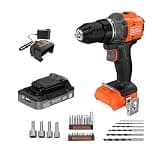
BLACK+DECKER 20V MAX Cordless Brushless ½-in. Drill Driver, 30 Pc. Drill Bit Set and Screwdriver Bit Set, 2Ah Battery and Charger Included, PowerConnect Electric Drill Cordless (BLD782PK30D1)
See price →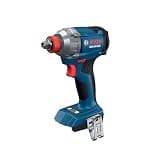
BOSCH GDX18V-285 18V Brushless Mid Torque 2-in-1 Impact Wrench and Driver - 2500 in-lbs Torque, 360 Ft.-Lbs Breakaway Torque, 0-3,600 Impacts/Min, Lightweight 2.4 lbs (Bare Tool)
See price →An impact driver accepts hex-shank bits only. That means all screwdriving bits work fine, but no standard drill bits. Some manufacturers sell hex-shank drill bits for impact drivers, and these work for basic holes in wood, but the impact mechanism is not designed for lateral drilling loads and the results are noticeably inferior to a proper drill. The first time you need to hang a shelf, fit a lock, or drill a hole for a cable — which happens sooner than most people expect — the impact driver cannot do it.
The drill's keyless chuck is also its least-discussed advantage: it accepts any bit from any manufacturer regardless of shank type, which means standard bits from any hardware store. Impact drivers require specifically-rated impact-resistant hex bits — widely available but an ongoing consumable cost as bits wear. For someone building out a bit set from scratch, the drill's universal compatibility with standard bits is a genuine practical benefit.
Screwdriving performance
When a screw meets significant resistance — a 100mm structural screw going into dense hardwood, a lag bolt into treated pine, a deck screw through 45mm timber — the drill has to fight. The motor strains, the bit begins to cam out of the screw head, and if you persist the head strips or the motor stalls. The impact driver's hammer mechanism responds to exactly that moment: when torque resistance exceeds a threshold, the internal hammer fires, delivering concussive rotational impacts that break through the resistance and seat the screw cleanly. The motor never strains because it never has to overcome the resistance alone.
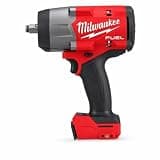
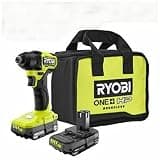
In practical terms this means an impact driver drives a 100mm structural screw into hardwood in around 3–4 seconds. The same screw with a drill takes significantly longer, requires more physical pressure, and risks screw head damage if cam-out occurs. For high-volume screwdriving — a decking project, a timber frame, kitchen unit installation — the impact driver completes the work in roughly half the time with less physical effort and fewer ruined screw heads.
Cam-out — the moment the bit skips out of the screw head and strips the recess — is the most common screwdriving frustration experienced by people using a drill on the wrong material. It happens almost every time a drill is pushed into long screws in dense material. Impact drivers essentially eliminate it because the concussive mechanism keeps the bit seated under the same resistance that causes cam-out in a drill. If you have ever abandoned a stripped screw halfway into a piece of hardwood, that is the specific problem an impact driver solves.
Size, weight, and convenience
Impact drivers are consistently shorter and lighter than equivalent drills. There is no clutch collar, no keyless chuck mechanism — the hex collet is mechanically simpler and sits closer to the motor. A typical 18V impact driver is 15–20% lighter than an 18V drill from the same brand and 20–30mm shorter nose-to-tail. That difference is irrelevant for a ten-minute job. For a full day of overhead work — driving screws into joists, fixing decking from a crouched position, fitting fixtures above shoulder height — it becomes significant by the afternoon.
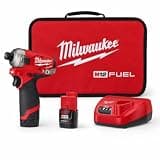
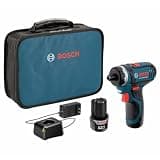
The shorter nose of an impact driver also matters in confined spaces: inside kitchen cabinets, in stud bays, between joists, in tight corners. A longer drill body can physically prevent you from getting the right angle on a fixing, forcing awkward repositioning or the use of right-angle adapters. Most trade workers who use both tools every day keep the impact driver as their default for screwdriving specifically because its form factor suits sustained use in varied positions.
Modern brushless cordless drills have closed the weight gap somewhat compared to older brush-motor designs — but the chuck geometry means they will always be longer than a compact impact driver. If the tool lives in a bag going to different jobs, the impact driver is easier to carry. If it lives in a drawer and comes out occasionally for DIY, the size difference will not affect your buying decision at all.
Which to buy first
If you own no power tools, buy the drill. It handles every screwdriving task an impact driver can — just slightly slower on long screws in hardwood — and it also drills holes, which you will need to do within the first few uses. A drill without an impact driver covers approximately 90% of home DIY. An impact driver without a drill covers perhaps 60%, and you will hit the 40% gap sooner than you expect.
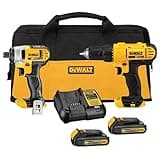
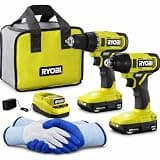
If you already own a drill and find yourself doing significant screwdriving — a deck, a timber structure, kitchen unit installation, or any project involving screws by the hundred — the impact driver is the best single addition you can make. The improvement in speed and ease is immediately obvious, and the impact driver handles a category of work where the drill was previously the bottleneck.
One thing worth knowing before buying either tool separately: most major manufacturers sell drill and impact driver twin packs on the same battery platform for considerably less than two individual purchases. DeWalt, Milwaukee, and Makita all offer these bundles, and the price per tool is typically 25–35% lower than buying separately. Both tools share batteries, both share the same charger, and the kit grows from there. If you are starting from nothing and know you will eventually want both — which most people who get into DIY do — the twin pack almost always wins on value.
Can You Use One Instead of the Other?
For basic screwdriving into softwood — assembling flat-pack furniture, fitting lightweight shelves, standard fixings into plasterboard anchors — a drill handles the job adequately and there is no practical need for an impact driver. The difference in speed and effort only becomes meaningful when you are driving a significant number of screws or working into harder, denser materials where resistance is the problem.
The impact driver cannot replace a drill for any serious drilling task. Hex-shank drill bits exist and some people use them in impact drivers for basic wood holes, but the impact mechanism is not designed for the lateral loads created by drilling, and the experience is noticeably inferior: slower, less controlled, and harder on the bit. The first time you need to drill a hole for a wall anchor, run a cable, or install a fixture — which is a routine part of any home DIY project — you need a drill. There is no workaround.
The cleanest answer to this question is a combo kit. Most major manufacturers sell matched drill and impact driver sets on the same battery platform — two batteries, one charger, both tools — for £100–£200 depending on brand and voltage. If you are starting your tool kit and the budget allows, this is the answer: the right tool for every job without compromise, and you avoid the "I'll get the other one later" trap that leaves people fighting the wrong tool for longer than necessary.
Related Tools Worth Knowing
- ›
Hammer Drill — When you need to drill into concrete, brick, or masonry — a standard drill will stall and the motor will burn out on sustained masonry work.
- ›
SDS Rotary Hammer — For heavy masonry — breaking through walls, core drilling, or any serious concrete work where even a hammer drill runs too hot.
- ›
Right-Angle Drill — When you are working inside kitchen cabinets, stud bays, or anywhere a standard drill body physically cannot fit at the right angle.
- ›
Electric Screwdriver — For low-torque precision work — small electronics, furniture fittings, or delicate fixings where a full drill is too powerful and risks stripping.
Our Top Picks
Best Cordless Drill
Best Impact Driver
Ready to buy? Check current prices below
The versatile option — drills holes and drives screws
Milwaukee Electric - M18 Fuel. 1/4 HEX Impact Driver
Purpose-built for driving screws — faster and more powerful
Frequently Asked Questions
Can an impact driver drill holes?▾
Not effectively. Impact drivers accept hex-shank bits only, so standard round-shank twist drill bits will not fit. Hex-shank drill bits exist and work for basic holes in softwood, but the impact mechanism is not designed for drilling and the results are slower and less controlled than a proper drill. For any real drilling task, use a drill.
Is an impact driver worth it for a homeowner?▾
Yes, once you already own a drill. For occasional DIY — assembling furniture, hanging shelves, basic fixings — a drill is sufficient. If you are building decking, timber structures, fitting a kitchen, or doing anything that involves driving screws by the hundred into hardwood, an impact driver will immediately change how quickly and easily you work. It is not a luxury for that kind of project.
Should I buy a combo kit or one tool at a time?▾
Combo kit if the budget allows. Most major brands sell drill and impact driver twin packs on the same battery platform for significantly less than two separate purchases — typically 25–35% cheaper per tool. Both tools share batteries and the same charger, and you get the right tool for every task from day one. Buying one now and 'getting the other later' usually means paying more overall.
What is the difference between 18V and 20V tools?▾
Nominally nothing — 18V and 20V refer to the same battery technology measured differently (18V nominal vs 20V maximum). North American brands like DeWalt and Milwaukee typically label their batteries as 20V max; European brands like Makita and Bosch use 18V nominal. Tools from these brands are compatible within each brand's own platform but not interchangeable between brands.
Does a brushless motor make a significant difference?▾
Yes for regular use. Brushless motors run cooler, last longer, and are more energy-efficient — delivering more runtime per battery charge and a significantly longer motor lifespan. For occasional home use the difference is less critical. If you expect to use the tool frequently, or you are buying a twin pack and want both tools to last, brushless is worth the extra cost.
Conclusion
For someone buying their first power tool, the cordless drill is the right choice — it covers the full range of home DIY and will not leave you stuck the first time you need to drill a hole.
Once you own a drill, the impact driver is the most impactful addition you can make if you regularly drive screws into hardwood, build with timber, or do anything involving a lot of fasteners. The formula is straightforward: drill first, impact driver second — or a combo kit from the same battery platform if the budget and ambition are there from the start. DeWalt, Milwaukee, and Makita all offer twin packs that represent significantly better value than two separate purchases.
Check the top picks above for the best current options at each price point. If you are leaning toward a combo kit, prioritise staying on one battery platform — the savings on shared batteries and a single charger pay dividends as your tool collection grows.