How Head to Head works
We compare two products or product types head to head, giving you a real verdict on which is the better choice for your situation — and exactly when to choose each one.
Dashcam with Parking Mode vs Basic Dashcam: Is Parking Mode Worth It?
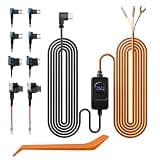
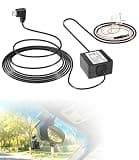
REDTIGER F7N Dash Cam Hardwire Kit USB C Port, Dashboard Camera Car Charger Cable Kit 12V- 24V to 5V w/Fuse Kit, Low Voltage Protection for Dash Cam Double-4 Fuses
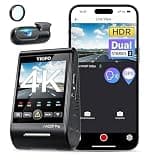
Records impacts and motion while the engine is off

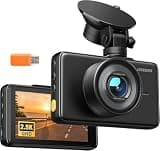
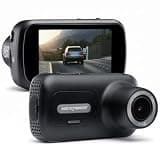
iZEEKER 2.5K Dash Cam Front, 1440P QHD Car Camera with 3" IPS Display
Records while you drive — simple, cheap, and zero installation
Our verdict — Parking Mode Dashcam wins
If you park on the street or in shared car parks — which most people do — a dashcam with parking mode is worth the extra cost. The majority of damage done to parked cars happens while the owner is not there: a door swing in a car park, a reversing driver who clips your bumper and drives away, or deliberate key scratches. A basic dashcam records none of this. A parking mode dashcam records the impact or the approach that caused it, giving you real footage to use with your insurer or to identify the other driver. The caveat is installation: parking mode requires either a hardwire kit or a battery pack to run when the engine is off, which adds cost and complexity.
Buy Parking Mode Dashcam if…
You regularly park on the street or in shared car parks, or you have experienced unexplained damage to a parked car with no evidence.
Buy Basic Dashcam if…
You park in a private driveway or garage and primarily want dashcam protection while driving.
You come back to your car and find a fresh dent on the rear quarter panel, no note under the wiper, and no witnesses. It happens to thousands of drivers every week, and unless the car park has working CCTV pointed at your exact bay, you are left filing a claim against your own policy and paying the excess yourself. A dashcam sitting on your windshield would not have helped — because it powered off the moment you turned the ignition off.
A basic dashcam records everything that happens while you drive: lane swerves, red-light runners, brake-check incidents. It plugs into the cigarette lighter socket, mounts to the windshield, and loops footage onto a micro SD card. A dashcam with parking mode does all of that but continues monitoring after the engine stops — using impact sensors and motion detection to capture hits, bumps, and suspicious activity around the vehicle while it sits parked. It requires a hardwire kit or external battery pack to stay powered, which adds cost and installation time.
This article breaks down where the two types genuinely differ, what parking mode actually captures versus what people assume it captures, and which type is worth your money in 2026. If you park in a private garage every night the answer is simple; if your car lives on a street or in a shared car park, the calculation changes significantly.
What is a Dashcam with Parking Mode?
A parking mode dashcam is a standard front-facing camera — same lens, same sensor, same loop recording while driving — with additional firmware and hardware that keeps it running after the ignition is turned off. When the engine stops, the camera enters a low-power monitoring state. Impact detection uses a built-in G-sensor to trigger recording when the camera registers a physical strike: a door opening into your panel, a reversing car hitting your bumper, or a shopping trolley rolling into the bodywork. Motion detection activates the camera when movement enters the frame, capturing anyone approaching the vehicle. Better units combine both triggers and save parking clips to a protected partition on the SD card so they are not overwritten by the driving loop.
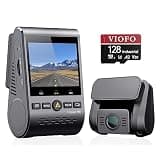
The key specs to evaluate are sensor quality (Sony Starvis or Starvis 2 for usable night footage), G-sensor sensitivity settings (adjustable is essential — too sensitive and wind gusts trigger constant clips), voltage cutoff threshold (11.6v–12.0v to protect your car battery), and whether the camera supports buffered parking mode, which continuously records a short buffer so the footage includes the seconds before the impact, not just the aftermath. Resolution matters less than sensor quality for parking mode: a 1080p camera with a good sensor will produce more usable nighttime footage than a 4K camera with a cheap sensor.
A parking mode dashcam is the right choice for anyone who regularly parks on streets, in shared car parks, at train stations, or in any location where the vehicle is left unattended and exposed to other drivers, pedestrians, or vandalism. It is also worth considering if you live in an area with rising vehicle crime or have previously experienced unexplained damage with no evidence. The camera pays for itself the first time it captures footage that recovers your insurance excess.
What is an Basic Dashcam?
A basic dashcam is a front-facing camera that mounts to your windshield, records continuously while the engine is running, and powers off when you turn the ignition off. It loops footage onto a micro SD card — when the card fills, the oldest footage is overwritten. Most basic dashcams plug into the cigarette lighter socket via a USB cable routed along the headliner, which means installation takes under five minutes and requires no tools, no fuse taps, and no electrical knowledge.
The specs that matter for a basic dashcam are resolution (1080p is the practical minimum for readable number plates at reasonable distance, 1440p is the current sweet spot), field of view (130–170 degrees covers adjacent lanes), whether the camera has a reliable G-sensor that locks incident clips from being overwritten, and loop recording behaviour. A 64GB endurance micro SD card provides roughly 3–4 hours of 1080p footage, which is sufficient for most commutes and journeys. Avoid cameras that require a proprietary app to access footage — the best units allow direct SD card access on any computer.
A basic dashcam is the right tool for anyone whose primary concern is driving incidents: capturing evidence of accidents, insurance fraud attempts, road rage, or dangerous driving by other motorists. If you park in a private driveway, a locked garage, or a secure underground car park where your vehicle is not exposed to passing traffic or pedestrians, a basic dashcam covers every scenario you are likely to encounter. It is simpler, cheaper, and requires zero ongoing maintenance beyond occasional SD card formatting.
Key Differences
Pros & Cons
Parking Mode Dashcam
- ✓Captures hit-and-run footage, door dings, and vandalism while the car is parked and unattended
- ✓Impact and motion triggers save only relevant clips — no need to review hours of empty car park footage
- ✓Buffered recording on better units captures the seconds before the impact, not just the aftermath
- ✗Requires a hardwire kit or external battery pack — installation takes 45–60 minutes and adds £15–£120 in parts
- ✗Parking mode running overnight on a weak or aging car battery can cause starting issues in cold weather
Basic Dashcam
- ✓Plug into the cigarette lighter and mount — full installation in under five minutes with no tools
- ✓No battery drain risk — camera powers off with the ignition every time
- ✓Lower price point and lower storage requirements make it the cheapest functional dashcam setup
- ✗Records nothing while parked — any damage, theft attempt, or hit-and-run in a car park goes uncaptured
- ✗Cannot provide evidence for the most common type of vehicle damage: incidents that happen while you are not in the car
What gets recorded — and what does not
A basic dashcam powers on with the ignition and powers off when the engine stops. It records everything that happens while you drive but captures nothing while the car is parked. Any hit-and-run in a car park, overnight key scratch, or minor shunt in a residential street simply does not exist on the footage.
A parking mode dashcam continues monitoring after the engine is off. Impact detection triggers a clip when the G-sensor registers a physical strike. Motion detection activates when movement enters the frame. Better units combine both — capturing the approach of the vehicle that caused the damage, not just the aftermath. For anyone who has dealt with unexplained dents and no witnesses, this is not a marginal benefit.
The practical difference becomes concrete when you file a claim. Driving footage from any dashcam is useful in a road accident dispute, but insurers and police increasingly accept parking mode footage as evidence for hit-and-run claims on parked vehicles. Without that footage, the standard outcome is a fault claim against your own policy, your excess deducted, and your premium affected at renewal. With footage showing the other vehicle's plate and the moment of impact, the claim goes against the other driver's insurance and your excess stays in your pocket.
Installation and setup
A basic dashcam plugs into the cigarette lighter socket. Mount it, connect the cable, done — under five minutes. The socket cuts power with the ignition, so there is no battery drain concern and no wiring to route.
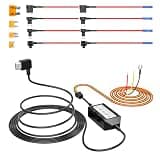
A parking mode dashcam needs power when the ignition is off. That means a hardwire kit tapped into the fuse box (£15–£30, plus 45–60 minutes if you are comfortable with car electrics), or an external battery pack (£60–£120) that charges while driving and powers the camera independently when parked. Both solutions work reliably — but neither is as simple as a standard plug-in install.
If you are not comfortable working with your car's fuse box, most car audio and accessory shops will fit a hardwire kit for £30–£50 including the cable routing. That is a one-time cost and takes around an hour. The result is a clean installation with no visible cables and reliable power management. For anyone who plans to keep the dashcam for more than a year — and most people do — the installation effort is a one-afternoon job that pays for itself the first time parking mode captures something useful.
Storage and footage management
A basic dashcam accumulates driving footage only. A 64GB card provides 2–3 hours of looping footage, which is more than adequate for covering any incident during a journey. Standard consumer SD cards are fine at this level of write frequency.
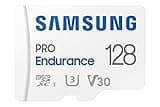
A parking mode dashcam generates footage overnight and throughout any parked period. A 64GB card fills quickly when parking mode runs for 10–12 hours. Quality parking mode cameras use a dedicated partition on the card so overnight clips do not overwrite driving footage — but 128GB is the practical minimum, and endurance-rated cards (designed for continuous write cycles) are worth the small premium to avoid early failure.
The ongoing cost difference is small but worth noting: a 128GB endurance micro SD card costs roughly £15–£20 more than a standard 64GB card, and it should be replaced every 12–18 months under heavy parking mode use. Budget dashcam owners using standard consumer cards in a parking mode camera will see corrupted files and card failures within months. If you are committing to parking mode, factor in one endurance-rated card per year as a running cost — it is trivial compared to the cost of lost footage when you actually need it.
Protection value and evidence quality
The real test of a dashcam is not whether it records — it is whether the footage is usable in a claim. Parking mode footage with a readable number plate and a clear timestamp is accepted by insurers and can be passed to police. Without it, a hit-and-run on a parked car is essentially unresolvable — your insurer pays under your own policy and your excess applies.
For regular street parkers, the maths on parking mode are straightforward: a single recovered excess after a parking incident typically covers the cost of the upgrade and the hardwire installation. If you park in a private garage every night, a basic dashcam is all you need.
Evidence quality depends heavily on sensor capability in low light. Most car park incidents and street damage happen in the evening or overnight, when ambient light is poor. Cameras with Sony Starvis sensors produce noticeably clearer footage in these conditions — the difference between a readable plate and a white blur. If parking mode protection is the reason you are buying, prioritise sensor quality over resolution: a 1080p Starvis camera at night outperforms a 4K camera with a budget sensor in exactly the conditions where parking mode matters most.
Can You Use One Instead of the Other?
For driving footage — capturing road accidents, insurance fraud attempts, dangerous overtakes — both types of dashcam do exactly the same job. A basic dashcam and a parking mode dashcam produce identical footage while the engine is running. If your only concern is what happens on the road while you are behind the wheel, a basic dashcam covers that completely and a parking mode camera offers no advantage during driving.
The gap is entirely about what happens when you leave the car. A basic dashcam cannot substitute for parking mode because it has no power source when the ignition is off — there is no setting, no workaround, and no firmware update that changes this. Some drivers attempt to run a basic dashcam from a USB power bank plugged into the cigarette lighter, but most vehicles cut socket power with the ignition, and even where they do not, the camera lacks the G-sensor logic to trigger clips efficiently, filling the card with hours of empty footage instead.
If you park in a private garage or secure underground car park and your vehicle is never exposed to passing traffic or pedestrians while parked, a basic dashcam is genuinely all you need — there is nothing for parking mode to protect against. If your car regularly sits on a street, in a supermarket car park, at a train station, or in any shared parking area, the basic dashcam leaves you unprotected for the majority of hours in a day when the car is stationary. The question is not whether parking mode is better in theory — it is whether your parking situation creates real exposure.
Related Tools Worth Knowing
- ›
Rear Dashcam — When you need rear coverage for tailgaters, rear-end collisions, or parking mode footage of the back of the vehicle where most car park damage occurs.
- ›
Dashcam with GPS — When you want speed and location data embedded in the footage — useful for insurance disputes and proving you were under the speed limit at the time of an incident.
- ›
Dash Cam Battery Pack — When you want parking mode without hardwiring into the fuse box — the battery pack charges while driving and powers the camera independently when parked.
- ›
Dual Channel Dashcam — When you want both front and rear footage from a single unit — covers blind spots and rear-end impacts without mounting two separate cameras.
Our Top Picks
Best Parking Mode Dashcam
Best Basic Dashcam
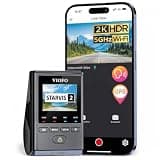
Ready to buy? Check current prices below
Records impacts and motion while the engine is off
iZEEKER 2.5K Dash Cam Front, 1440P QHD Car Camera with 3" IPS Display
Records while you drive — simple, cheap, and zero installation
Frequently Asked Questions
Will parking mode drain my car battery?▾
A well-configured setup should not leave you stranded. Hardwire kits include a voltage cutoff (typically at 11.8v) that kills parking mode before the battery is depleted enough to affect starting. The risk is higher with older batteries or vehicles that sit parked for multiple days. If that applies to you, use an external battery pack instead of direct hardwire.
How long will parking mode footage stay on the card before being overwritten?▾
Typically 8–16 hours of parking footage on a 128GB card before the oldest clips loop. Impact-triggered clips are usually saved to a protected folder and are not overwritten by the loop. If you park for multiple days between checking, increase the card size or lower the parking mode recording quality.
Can I install a hardwire kit myself?▾
Many people do. You need a fuse tap that matches your car's fuse box type, a multimeter to identify the right fuses, and basic confidence routing cable through the headliner. Most dashcam brands sell kit-specific hardwire cables. If you are not comfortable with car electrics, most car audio shops will fit it for £30–£50.
Does parking mode work in the dark?▾
Impact detection triggers regardless of light level. In complete darkness, most cameras produce grainy footage — enough to see a vehicle struck yours, often not enough to read a plate. Cameras with Sony Starvis sensors handle low light significantly better and are worth specifying if night parking protection matters to you.
My dashcam has parking mode — why does it need a hardwire kit?▾
A cigarette lighter socket on most cars cuts power when the ignition is turned off. Without a hardwire kit or an external battery, the camera loses power the moment you turn the engine off — parking mode never activates. The hardwire kit connects the camera directly to a fuse that stays live when parked.
Conclusion
A basic dashcam protects you on the road. A parking mode dashcam protects your car around the clock — and for most drivers, the car spends more hours parked than moving. The extra cost of parking mode is the hardwire kit or battery pack plus a larger endurance SD card; the return is footage of the incident that would otherwise be unwitnessed, unrecorded, and unrecoverable. For anyone who has filed a claim for car park damage with no evidence, the value proposition is not abstract.
If you park in a private garage or secure driveway and your car is never exposed to other vehicles or pedestrians while stationary, a basic dashcam is the right choice — simpler installation, lower cost, and no ongoing storage or battery considerations. If your car regularly sits on a street, in a supermarket car park, at a station, or in any shared parking area, a parking mode dashcam is worth the upgrade. The first recovered excess after a parking incident pays for the entire setup.
Check the top picks above for the best options in each category. Prioritise Sony Starvis sensor cameras if parking mode is your primary reason for buying — night footage quality is the difference between a useful clip and an unusable one. And budget for a 128GB endurance micro SD card from the start; it is a small cost that prevents the most common point of failure in any dashcam setup.